Compostable bags explained: EN 13432, home vs industrial, and the Vietnam Ecolabel
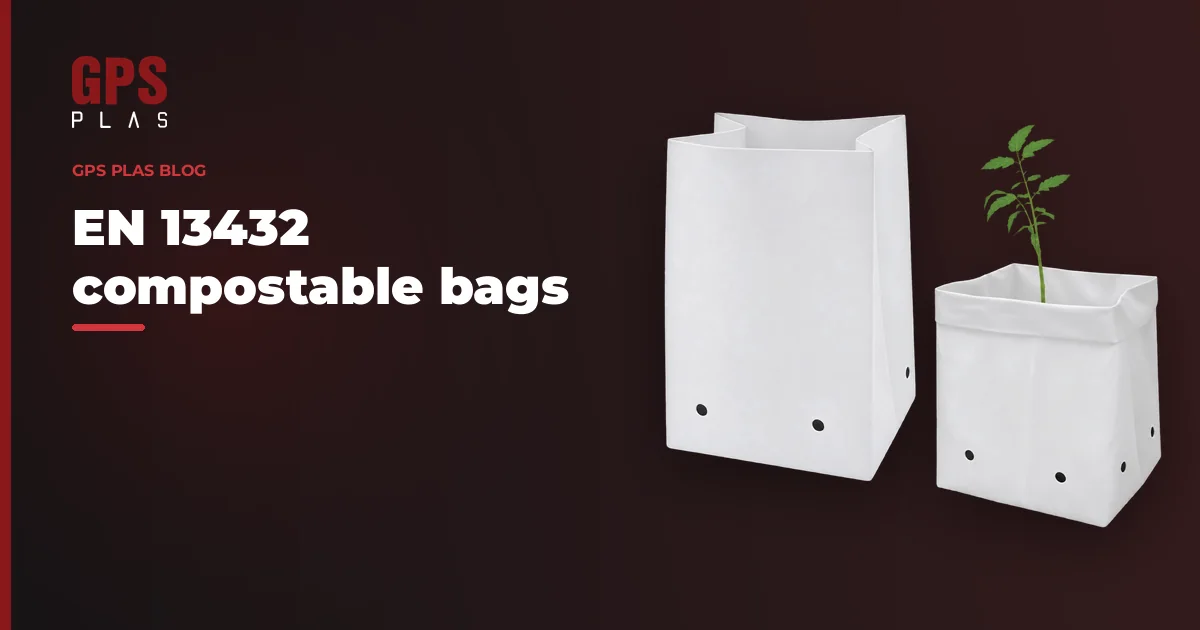
Compostable is a stricter claim than biodegradable. Under EN 13432, a compostable bag must biodegrade within 180 days in composting conditions, break down physically and leave compost that is safe for plants. CompoFlex is the GPS PLAS compostable range: a PBAT compound made in Tay Ninh, EN 13432 compliant, in Home and Industrial grades, with Vietnam Ecolabel VN-ECO-2026-004.
Compostable is not the same as biodegradable, and neither is oxo
Buyers, printers and supermarket teams still mix three labels. Getting this wrong is how a pack ends up with an eco claim that the material cannot support.
- Biodegradable means microorganisms convert the material into CO2, water and biomass. Say it with the standard and the number of days. GPS PLAS uses that form for BioFlex, which passed EN ISO 14855-1 in 227 days and is not sold as compostable.
- Compostable is the stricter claim. The material must biodegrade within a fixed time in composting conditions, disintegrate, and leave compost that is safe for plants. EN 13432 is the European reference for packaging. Every compostable bag is biodegradable, but not every biodegradable bag is compostable.
- Oxo-degradable bags, often sold in Vietnam as “túi tự hủy”, are conventional plastic with an additive that makes them fragment. They break into small plastic pieces instead of biodegrading, and they would not pass EN 13432. They are not compostable and they are not a BioFlex or CompoFlex equivalent.
If your tender or on-pack copy says “compostable”, you need a compostable grade and the documents that sit behind EN 13432. If it only says “biodegradable”, check whether the buyer actually meant compostable. Many do.
What EN 13432 requires
EN 13432:2000 is listed by the European Commission among the harmonised standards under the packaging and packaging waste rules. The standard requires four practical tests:
- Low heavy metals in the material.
- A biodegradation pass within 180 days in composting conditions.
- Disintegration within 12 weeks.
- Compost that does not harm plants.
That is why a biodegradation result alone is not enough for a compostable label. BioFlex’s 227-day EN ISO 14855-1 pass is a biodegradation result. It misses the 180-day window used for EN 13432, so GPS PLAS never calls BioFlex compostable. CompoFlex was tested to ISO 14855-1 by TÜV Rheinland and passed, within the 180-day EN 13432 limit.
ISO 14855-1 itself is the laboratory method for ultimate aerobic biodegradability under controlled composting conditions, by measuring evolved carbon dioxide. It is a test method, not a compostable logo. The compostable claim for packaging still rests on the full EN 13432 scheme.
EN 13432 in four tests
The European reference standard for compostable packaging.
Low heavy metals
Composition limits for regulated metals.
Biodegradation
A pass within 180 days in composting conditions.
Disintegration
Physical breakdown within 12 weeks.
Safe compost
The compost must not harm plants.
Home composting
CompoFlex Home
Designed for home composting conditions.
TÜV AUSTRIA OK compost HOME
Store cool and dry, 9 to 12 months.
Industrial composting
CompoFlex Industrial
For industrial composting facilities.
ARCHA and TÜV Rheinland tests, EN 13432 compliant.
Store cool and dry, 9 to 12 months.
Home composting versus industrial composting
Compostable also splits by the conditions in which the bag is meant to be treated. A home compost heap is cooler and less tightly controlled than an industrial composting facility. A grade that passes an industrial test is a different grade from one made for home composting.
GPS PLAS offers two CompoFlex grades, both based on PBAT compounded with starch or mineral, in house:
- CompoFlex Home, for home composting, with TÜV AUSTRIA OK compost HOME.
- CompoFlex Industrial, for industrial composting, with ARCHA and TÜV Rheinland tests, EN 13432 compliant.
Both grades are described as translucent, with colours possible, and both share a storage window of 9 to 12 months. Store them cool and dry, and use first in, first out. That storage time is shorter than BioFlex, which is published at more than 3 years and is the usual choice when packed goods must sit for over 12 months. If you put a compostable bag into a long warehouse programme, plan the intake and rotation, or you will have a quality problem that has nothing to do with the compostable claim.
Choose the grade that matches the collection system your customer actually has. A home-compostable mark is only useful where home composting will happen. An industrial grade needs access to industrial composting. The bag does not become compostable because the word is printed on it.
The Vietnam Ecolabel on CompoFlex
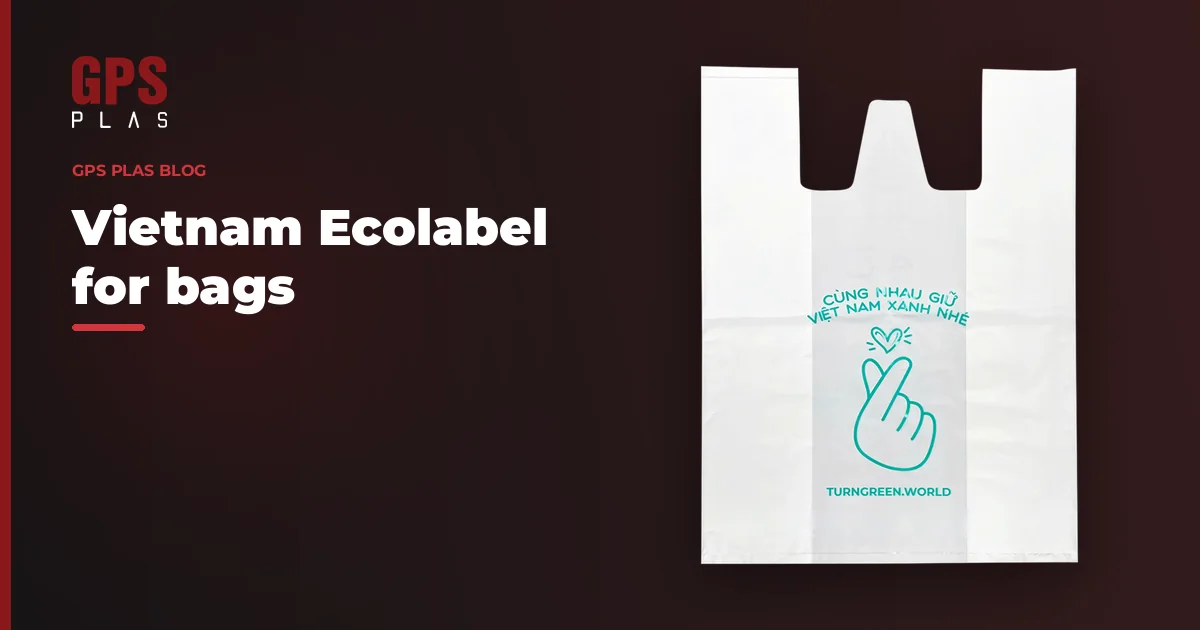
CompoFlex bags hold the Vietnam Ecolabel, certificate code VN-ECO-2026-004. The site records Decision 2032/QĐ-BNNMT of 29 May 2026, granted to “Bao bì phân hủy sinh học Compoflex”, valid for three years. The Vietnam Ecolabel is issued against published criteria, and each certificate covers a named product. When you check a supplier’s file, ask for the decision number and VN-ECO code, check that the named product matches what you buy, and check the three-year validity date.
The Ecolabel is a product certificate. For export or for a European buyer, keep the EN 13432 / ISO 14855-1 reports in the same pack as the Ecolabel decision. For a Vietnamese retail programme, the Ecolabel is often the mark the buyer asks to see first. You may need both. For the two Ecolabel routes under NSTVN-01:2023, which GPS PLAS products hold the mark, and why factory-direct buying can matter for the environmental protection tax on bags, read our guide to the Vietnam Ecolabel for plastic bags.
Where CompoFlex is used, including products only offered in this material
CompoFlex is supplied as resin (film blowing, injection moulding and casting film grades), as blown film on roll to your width and thickness, and as finished bags, converted and printed in the factory, up to 4 colours. Like ReFlex and BioFlex, it can be made into T-shirt bags, die-cut bags, shopping bags, cup bags, bags on roll, waste bags, dog poop bags, poly bags, mailer bags, and VCI or ESD formats where they apply.
Four products are offered in CompoFlex only: grow bags, grow pot bags, mulching film and shrink film. Those applications sit outdoors or in agriculture, or they are shrink applications, and the factory does not list ReFlex or BioFlex equivalents for them. If you are sourcing grow bags or mulch film, you are in compostable territory at GPS PLAS, not in recycled PE.
CompoFlex food bags also passed a Eurofins food contact test (report EFUZ26071295-CG-01) on heavy metal migration, potassium permanganate consumption and residue on evaporation. That is a food-contact result for the bags that were tested, not a blanket approval for every food use. Share the intended use so the factory can confirm the grade.
CompoFlex is compounded and converted in the same Tay Ninh factory as the rest of the GPS PLAS range, a 5,000 m² plant with a capacity of 500 tons per month. That matters for a compostable programme because the resin formula, the film and the printed bag can be kept in one chain of custody, with ISO 9001:2015 and ISO 14001:2015 factory certificates (HT 3883 and HM 640) alongside the material tests. Orders are made to your size, thickness and artwork. The film is translucent and can be coloured; print is up to 4 colours.
Because the storage window is 9 to 12 months, agree packing, shipping and warehouse rotation when you place the first order, not after the bags have sat in a warm store. Keep them cool and dry, and use older lots first. If your distribution cycle is longer than that window, say so early: BioFlex is the GPS PLAS grade designed for a longer shelf life.
If a market requires a compostable bag, for example for food-waste collection or a specification that names EN 13432, CompoFlex is the GPS PLAS answer. If you need a longer shelf life for products that sit over 12 months, look at BioFlex instead, and ask for samples of both. To start, request CompoFlex samples, or read how to choose recycled, biodegradable or compostable bags.
FAQ
What is the difference between compostable and biodegradable bags?
Compostable bags must biodegrade within 180 days in composting conditions, disintegrate and leave safe compost, as set by EN 13432. Biodegradable only means microorganisms break the material down, with no fixed time limit in that looser claim. Every compostable bag is biodegradable, but not every biodegradable bag is compostable.
What does EN 13432 require?
The European standard for compostable packaging requires four things: low heavy metals, a biodegradation pass within 180 days, disintegration within 12 weeks, and compost that does not harm plants. The European Commission lists EN 13432:2000 among the harmonised packaging standards.
What is the difference between home and industrial compostable CompoFlex?
CompoFlex Home is the grade for home composting and holds TÜV AUSTRIA OK compost HOME. CompoFlex Industrial is the grade for industrial composting facilities; it was tested to ISO 14855-1 by ARCHA and TÜV Rheinland and is EN 13432 compliant. Both grades have a 9 to 12 month storage time, stored cool and dry, first in first out.
Does CompoFlex carry the Vietnam Ecolabel?
Yes. Decision 2032/QĐ-BNNMT of 29 May 2026 granted certificate VN-ECO-2026-004 to "Bao bì phân hủy sinh học Compoflex", valid for three years.
Are oxo or "túi tự hủy" bags compostable?
No. Oxo-degradable bags are conventional plastic with an additive that makes them fragment. They break into small plastic pieces instead of biodegrading, and they would not pass EN 13432.
Can compostable bags be used for food?
CompoFlex food bags passed a Eurofins food contact test (report EFUZ26071295-CG-01) on heavy metal migration, KMnO4 consumption and residue on evaporation. Share your intended use so the factory can confirm the right grade.