EPR and PPWR for bag buyers: what to plan for when you source from Vietnam
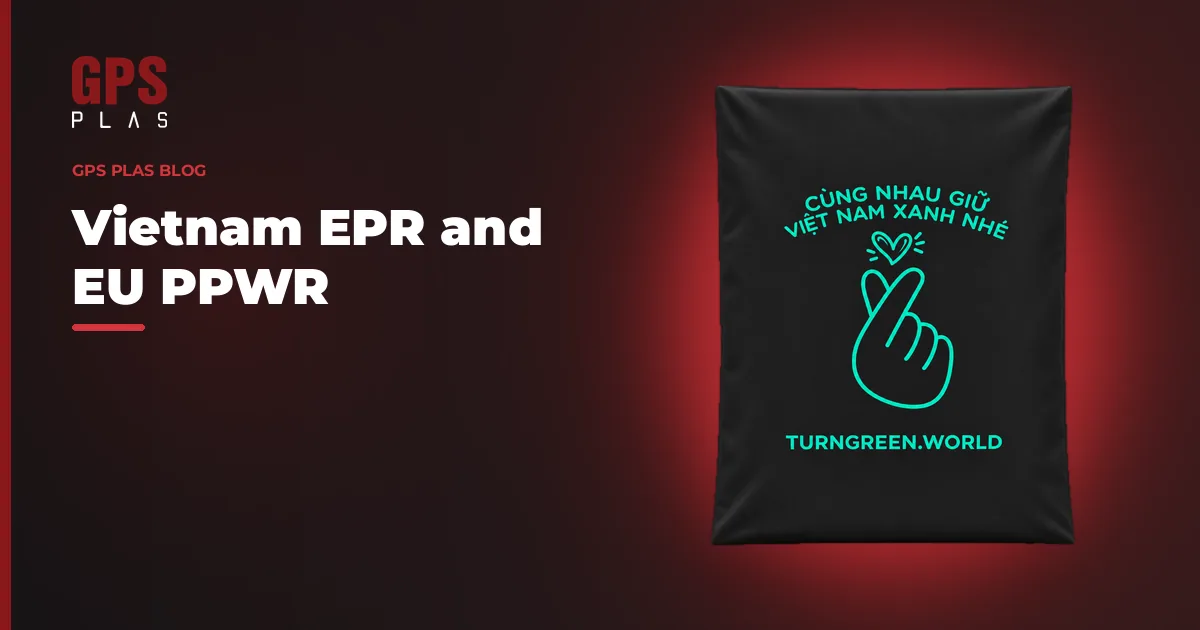
Bag and packaging buyers who source in Vietnam now have two rulebooks to plan around. Vietnam’s Decree 110/2026/NĐ-CP sets extended producer responsibility (EPR) for products and packaging placed on the Vietnamese market. In the European Union, the Packaging and Packaging Waste Regulation (EU) 2025/40 (PPWR) applies from 12 August 2026 to packaging placed on the EU market. An exporter selling into the EU must plan for PPWR even when the bags are made in Vietnam. A brand selling packed goods in Vietnam must plan for Decree 110 even when the same factory also ships export orders. This guide sets out the official dates and targets, and how ReFlex, CompoFlex and BioFlex can help you plan.
Who Vietnam EPR covers, and who it does not
Decree 110/2026/NĐ-CP was issued on 1 April 2026 and took effect on 25 May 2026. It details Articles 54 and 55 of the Law on Environmental Protection, and was published in Official Gazette Công báo No. 229 of 19 April 2026.
It covers producers and importers that place products and packaging listed in Appendix I on the Vietnamese market. For packaging, that includes commercial packaging, both direct and outer, of food (except chewing gum), cosmetics, medicines, fertilisers, animal feed and veterinary drugs, soaps, detergents and cleaning preparations, and cement.
When several manufacturers are involved, the responsible party is the one whose brand appears on the label. When production is outsourced, the company that places the outsourcing order carries the duty, not the contract manufacturer. For entrusted imports, the labelling party is responsible.
Three exemptions matter for factories and exporters. Goods made or imported for export, temporary import-re-export, and goods for research and testing are described as exempt. So are producers whose revenue from covered goods is under VND 30 billion a year, and producers that take back and reuse their own packaging at or above the mandatory rate.
The first planning question is not “are the bags made in Vietnam?” but “where is the packed product placed on the market?” Export packing sits outside this EPR, as the decree is written. The same bag style, used on goods sold in Vietnam, can sit inside it.
Mandatory recycling rates and the ways to comply
Appendix I sets a minimum share, by weight, that must be recycled: paper and carton 20%; multi-layer mixed paper 15%; aluminium 22%; iron and other metals 20%; rigid PET 22%; rigid HDPE, LDPE, PP and PS 15%; rigid EPS, PVC and other rigid plastic (except biodegradable plastic) 10%; flexible plastic packaging, mono-material and multi-material, 10%; glass 15%.
Most bags sit in the flexible plastic row, at 10%. A rigid tub or bottle uses a different row. For plastics, recycling must produce commercial resin pellets or specified packaging or products. Flakes do not count. For rigid plastics, fuel does not count either. The rates are to be raised every three years by the Minister of Agriculture and Environment, by no more than 10% each time, starting in 2029. Surplus recycling can be carried forward.
A company can comply in four ways: recycle in house, hire a recycler, authorise a producer responsibility organisation (PRO), or pay a financial contribution to the Vietnam Environmental Protection Fund. The contribution is F = R × V × Fs, where R is the rate, V is the weight placed on the market, and Fs is the unit rate set by the Minister (also reviewed every three years from 2029). Companies that pay the contribution do not have to register a recycling plan or report recycling results.
Material choice can move a pack into a different Appendix I row, and one rigid-plastic row expressly excludes biodegradable plastic. The decree does not grant a general reduction for biodegradable or recycled-content packaging. Using recycled content in the bag you buy is a different act from meeting a recycling obligation. In practice, mono-material PE is easier to recycle into pellets, which is the form the decree requires, and lighter packing lowers V in the formula. Separately, a waste-treatment contribution for carrier bags (Appendix II, item 6.8) covers non-biodegradable bags only.
Deadlines and reporting under Decree 110
Before 1 April each year, the obligated company must register the recycling plan for packaging placed on the market in the previous year and report the previous year’s results through the national EPR information system, or declare the financial contribution instead. If it pays the contribution, payment is due before 20 April. Forms and guidance are set out in Circular 24/2026/TT-BNNMT.
A short internal plan usually covers the work: list every packaging item against the Appendix I rows, weigh last year’s placements, test whether the VND 30 billion threshold applies, and compare the cost of recycling with the contribution. A move to mono-material formats or a lighter specification changes cost under either route.
Two rulebooks bag buyers must plan for
Vietnam Decree 110/2026 and EU Regulation (EU) 2025/40.
Vietnam EPR
Decree 110/2026/NĐ-CP
Issued 1 April 2026. In force 25 May 2026.
Flexible plastic packaging: 10% mandatory recycling rate (Appendix I).
Plan or declare before 1 April. Pay contribution before 20 April.
Applies to goods placed on the Vietnamese market.
EU PPWR
Regulation (EU) 2025/40
In force 11 February 2025. Applies from 12 August 2026.
Recycled-content minimums from 1 January 2030 (or later, Art. 7).
Design-for-recycling from 2030. Harmonised sorting labels from 2028.
Applies to packaging placed on the EU market.
What the EU PPWR requires, with dates on the official record
Regulation (EU) 2025/40 is the EU rulebook for packaging placed on the Union market. The European Commission packaging-waste page states that the Regulation has been in force since 11 February 2025 and that the application date is 12 August 2026. The same dates appear in the official EUR-Lex summary. The full text is on EUR-Lex. The Commission page also states the aim of making all packaging on the EU market recyclable in an economically viable way by 2030. The dates and targets below are planning facts from those official sources.
On recyclability, Article 6 requires packaging to be recyclable. Design-for-recycling requirements apply from 1 January 2030, or 24 months after the relevant delegated acts, whichever is later. The requirement that packaging is recycled at scale applies from 1 January 2035, or five years after the relevant implementing acts, whichever is later. Buyers should track those later-of-two dates, not only the calendar years.
On recycled content, Article 7 sets minimum percentages of recycled content recovered from post-consumer plastic waste, calculated as an average per manufacturing plant and year, per packaging type and format in Table 1 of Annex II. From 1 January 2030, or three years after the implementing act adopted under Article 7(8), whichever is later, the minimums are:
- 30% for contact-sensitive packaging made from PET as the major component, except single-use plastic beverage bottles
- 10% for contact-sensitive packaging made from plastic materials other than PET, except single-use plastic beverage bottles
- 30% for single-use plastic beverage bottles
- 35% for plastic packaging other than the types above
From 1 January 2040 the same Article sets higher minimums: 50% for contact-sensitive PET (except those bottles), 25% for other contact-sensitive plastic packaging (except those bottles), 65% for single-use plastic beverage bottles, and 65% for other plastic packaging. A Commission review of the 2030 figures, and of whether the 2040 figures remain appropriate, is due by 12 February 2032.
Many bags and films will fall under “other plastic packaging” (35% in 2030, 65% in 2040). Food-contact or other contact-sensitive PE packs may fall under the lower non-PET contact-sensitive row (10% in 2030, 25% in 2040). The official EUR-Lex summary also notes certain exceptions, including for compostable plastics, as well as specified pharmaceutical, infant-food, medical-device and dangerous-goods packaging. If you believe an exception applies, confirm it against the Regulation.
On labelling, Article 12 requires packaging placed on the market to carry a harmonised label on material composition, to help consumer sorting, from 12 August 2028 or 24 months after the relevant implementing acts, whichever is later. Recycled-content and bio-based-content labels are not mandatory, but if a company chooses to display that information it must use the harmonised EU specifications from the same later-of-two date.
How ReFlex, CompoFlex and BioFlex help you plan
ReFlex is GRS recycled PE, offered from 10% to 100% recycled content. It is recyclable and is not biodegradable. The factory holds GRS 4.0 certificate IDF-26-1034337, issued by IDFL, valid to 15 October 2027. A specific order is GRS certified only when a Transaction Certificate is issued for that shipment, which is the practical control for documented post-consumer recycled content. ReFlex also holds Vietnam Ecolabel VN-ECO-2025-012. See our guide to GRS-certified recycled PE bags.
CompoFlex is the compostable range: EN 13432 compliant, in Home and Industrial grades, with Vietnam Ecolabel VN-ECO-2026-004. Storage is 9 to 12 months, stored cool and dry. See compostable bags explained. PPWR treats compostable packaging under its own definitions and dates.
BioFlex is biodegradable PE-TPS. It passed EN ISO 14855-1 in 227 days and is not sold as compostable, because that result sits beyond the 180-day window EN 13432 uses. Storage is more than three years. The Recycled grade uses GRS recycled PE and is 0% virgin PE. BioFlex should not be used as a stand-in for a compostable specification, and it should not be assumed to fall under a compostable exception in PPWR.
For Vietnamese-market EPR, mono-material ReFlex can make the recycling route more practical, because recyclers need material they can turn into pellets. CompoFlex and BioFlex speak to a different set of bag rules and the Decree 110 waste-treatment contribution for non-biodegradable carrier bags.
A practical plan for exporters and brands
Start by splitting volume by market. For goods placed in Vietnam, map each pack to an Appendix I row, weigh last year’s placements, and decide between recycling and the Fund contribution before the April deadlines. For goods placed in the EU, map each pack to a PPWR packaging type, note the 12 August 2026 application date, and diary the later recycled-content, recyclability and labelling dates, including where those dates move if implementing acts are late.
Then brief the factory on the evidence you need, not only the bag style. For documented recycled content, ask for a Transaction Certificate on the ReFlex or BioFlex Recycled shipment. For a compostable brief, ask for the EN 13432 file and the CompoFlex grade, Home or Industrial. For biodegradable but not compostable, BioFlex is the GPS PLAS answer, with the 227-day ISO 14855-1 result in the file.
GPS PLAS compounds the resin and converts the bags in one factory in Tay Ninh, with a published capacity of 500 tonnes a month, which helps when a material claim and a shipment certificate must sit on the same order. If you are planning an EPR filing or a PPWR pack review, contact the factory with the market, the bag format and the evidence you need. We will help you plan the material and the file.
FAQ
Does Vietnam EPR apply if I only export bags or packed goods from Vietnam?
Decree 110/2026 covers producers and importers that place listed products and packaging on the Vietnamese market. Goods made or imported for export, temporary import-re-export, and research and testing are described as exempt. If the same packing is also sold in Vietnam, that placing on the market is a separate question.
When does the EU PPWR apply?
Regulation (EU) 2025/40 has been in force since 11 February 2025 and applies from 12 August 2026, as stated on the European Commission packaging-waste page and in the official EUR-Lex summary. Later dates in the Regulation, such as recycled-content minimums and labelling, have their own start points, sometimes tied to implementing acts.
What recycled-content minimums does PPWR set for plastic packaging in 2030?
Article 7 sets, from 1 January 2030 or three years after the relevant implementing act, whichever is later, minimum post-consumer recycled content of 30% for contact-sensitive PET packaging (except single-use plastic beverage bottles), 10% for other contact-sensitive plastic packaging (except those bottles), 30% for single-use plastic beverage bottles, and 35% for other plastic packaging. Higher figures apply from 1 January 2040.
Does using recycled or biodegradable bags reduce Vietnam EPR?
The decree gives no general reduction for biodegradable or recycled-content packaging. Biodegradable plastic is excluded from one rigid plastic category in Appendix I; otherwise the obligation depends on packaging type and weight. The waste-treatment contribution for carrier bags (Appendix II, item 6.8) covers non-biodegradable bags only.
How do ReFlex, CompoFlex and BioFlex help with this planning?
They help you plan. ReFlex is GRS recycled PE (10 to 100%), recyclable, not biodegradable, with a Transaction Certificate per order when a shipment must be GRS certified. CompoFlex is EN 13432 compostable packaging. BioFlex is biodegradable PE-TPS that is not sold as compostable. Material choice can change which EPR row applies, and GRS documentation can support recycled-content reporting.
When do I register or pay under Decree 110?
Before 1 April each year, register the recycling plan for packaging placed in the previous year and report previous-year results through the national EPR information system, or declare the financial contribution. If you pay the contribution, pay it before 20 April. Forms and guidance are set out in Circular 24/2026/TT-BNNMT.