Vietnam Ecolabel for plastic bags: two routes, and why factory-direct buying matters
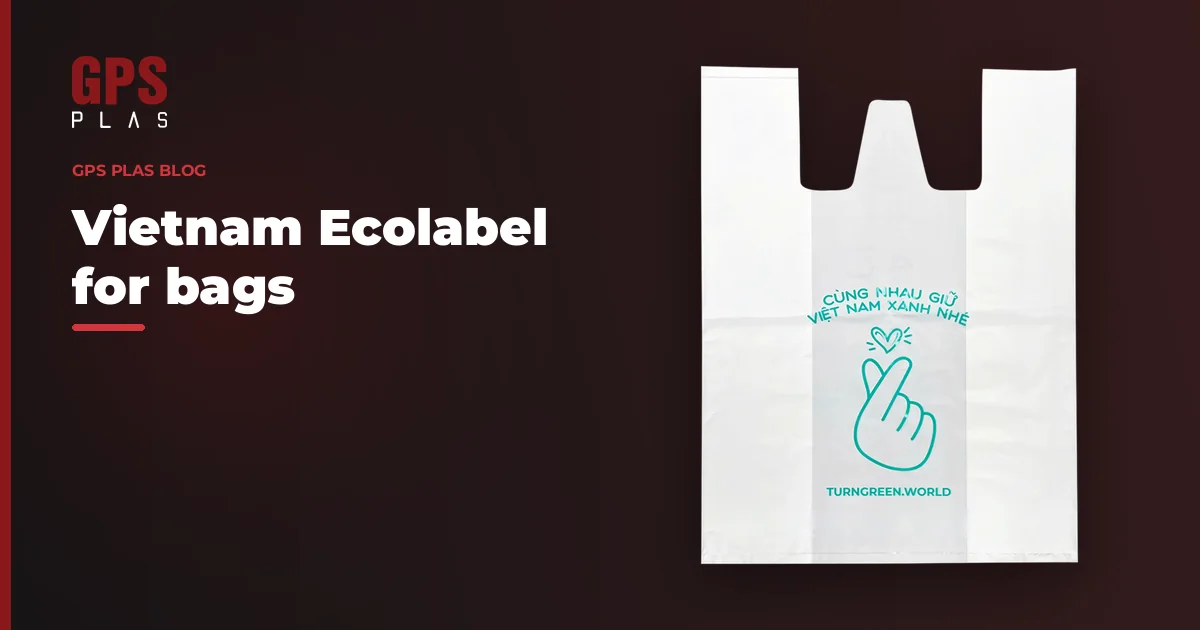
The Vietnam Ecolabel (Nhãn sinh thái Việt Nam) for plastic bags is a product certificate issued against published national criteria, NSTVN-01:2023. Those criteria cover two routes: biodegradable bags, and recycled PE or PP bags that contain at least 20% recycled resin, are 50 µm thick or more, and measure at least 50 cm on each side. At GPS PLAS, CompoFlex holds the mark on the biodegradable route and ReFlex holds it on the recycled-content route. This guide explains the two routes, which products hold the certificate, and why buying bags factory-direct can matter for the environmental protection tax on plastic bags.
What the Vietnam Ecolabel for bags is
The Vietnam Ecolabel is the national environmental label. For plastic packaging, the criteria are NSTVN-01:2023, “environmentally friendly plastic packaging”, set by Decision 3257/QĐ-BTNMT of 7 November 2023. A manufacturer applies for a named product, the product is assessed against the criteria, and a decision is issued with a certificate code in the form VN-ECO-year-number. Recent decisions are issued by the Ministry of Agriculture and Environment, so they carry the code QĐ-BNNMT. The certificate is valid for three years.
The mark is therefore a product certificate, not a factory-wide badge. When you check a supplier’s file, ask for the decision number and the VN-ECO code, check that the named product is the bag you are buying, and check the three-year validity date.
The two routes under NSTVN-01:2023
The bag criteria are built around two routes. A product is certified on one route or the other, not as a generic “eco bag”.
Biodegradable bags. The bag must meet the biodegradation requirements set in the criteria, with proper test reports behind the claim. This is the route for a compostable or biodegradable specification that the national criteria accept. It is not a licence to print a vague “self-destruct” or “túi tự hủy” claim. Those oxo-style claims are no longer allowed, and oxo-degradable plastics have been banned in Vietnam since 2026. The regulation now requires technologies that do not create microplastics.
Recycled PE or PP bags. The bag must contain at least 20% recycled resin, be 50 µm thick or more, and measure at least 50 cm on each side. The size and thickness thresholds are part of the criteria, not optional marketing. A thin vest bag that is short of 50 cm on a side, or thinner than 50 µm, does not meet this route, even if it contains some recycled resin.
Vietnam Ecolabel for bags: two routes
Criteria NSTVN-01:2023 for environmentally friendly plastic packaging.
Route A
Biodegradable bags
The bag must meet the biodegradation requirements, with proper test reports.
GPS PLAS example
CompoFlex · VN-ECO-2026-004
Decision 2032/QĐ-BNNMT, 29 May 2026
Also EN 13432 compliant.
Typical uses: cashier bags on a compostable or biodegradable brief.
See the compostable bags guide →Route B
Recycled PE or PP bags
At least 20% recycled resin. Thickness of 50 µm or more. Each side at least 50 cm.
GPS PLAS example
ReFlex · VN-ECO-2025-012
Decision 4054/QĐ-BNNMT, 30 September 2025
GRS recycled PE, with a Transaction Certificate per order when required.
Typical uses: shopping bags and cashier bags specified at 50 µm and 50 cm per side.
Those thresholds matter in a retail briefing. A cashier bag programme that wants the recycled-content Ecolabel has to be specified at or above 50 µm and 50 cm per side, with the recycled share documented at 20% or more. If the brief is a lighter or smaller bag, the recycled route is not available, and the conversation moves to the biodegradable route or to a different format.
Which GPS PLAS products hold the Vietnam Ecolabel
CompoFlex holds certificate VN-ECO-2026-004, granted by Decision 2032/QĐ-BNNMT of 29 May 2026 to “Bao bì phân hủy sinh học Compoflex”, valid for three years. That is the biodegradable route. CompoFlex is also EN 13432 compliant, in Home and Industrial grades. The Ecolabel and EN 13432 answer different questions: one is the national mark against NSTVN-01:2023, the other is the European compostable-packaging standard. For the four EN 13432 tests, the two grades, the 9 to 12 month storage window and food-contact evidence, use the compostable bags guide.
ReFlex holds certificate VN-ECO-2025-012, granted by Decision 4054/QĐ-BNNMT of 30 September 2025, on the recycled-content route. ReFlex is GRS recycled PE, offered from 10% to 100% recycled content. It is recyclable and is not biodegradable. A specific order is GRS certified only when a Transaction Certificate is issued for that shipment. The Ecolabel decision and the GRS file are complementary: the Ecolabel shows the product met NSTVN-01:2023, including the 20%, 50 µm and 50 cm thresholds; GRS, with a TC, traces recycled content in a given shipment.
The environmental protection tax, and what happens when a trader resells bags
Beside the Ecolabel itself, bag buyers in Vietnam often ask how the environmental protection tax on plastic bags is applied, and whether a certified bag is treated differently in the supply chain.
Packaging for pre-packed goods can be exempt from the tax on single-use plastic if the direct buyer is the one to pack: goods they make or process, goods they buy and pack, or goods they pack as a packaging service. The exemption is built around the packer being the direct buyer, and around a written commitment to that use.
A trader or wholesaler buying plastic packaging to resell does not fit that exemption. In that case, a tax of VND 50,000 (about USD 2) per kilogram sold can be applied, which makes the offer uncompetitive. When a trader buys and resells, the tax point can apply again, because the reseller is not the party packing the goods.
That is a supply-chain issue, not a slogan. A supermarket, brand or contract packer that buys bags to pack its own goods is in a different position from a trader that buys the same bags to sell on. The bag can be identical. The tax treatment is not.
Why buying factory-direct matters
This is why factory-direct buying is part of the tax conversation, not only a quality or lead-time preference. If the packer buys direct from the manufacturer, the direct buyer is the party that packs. That is the structure the exemption is built around. If the same packer buys through a trader, the first sale may already have been taxed, and the offer is no longer priced on the same basis.
GPS PLAS compounds the resin and converts the bags in its factory at Long Hau Industrial Park, near Ho Chi Minh City, Vietnam. Buying from the factory means the certificate, the bag specification and the commercial invoice sit in one chain: the named Ecolabel product, the thickness and size on the recycled route, or the biodegradation file on the biodegradable route, and a shipment that has not been resold through a trader. For more on that factory-direct model, see how to source custom bags direct from a Vietnam factory and why vertical integration matters.
How this sits with compostable and recycled claims
The Vietnam Ecolabel is one certificate. A CompoFlex cashier bag can carry VN-ECO-2026-004 and still need the EN 13432 reports for an export buyer. A ReFlex shopping bag can carry VN-ECO-2025-012 and still need a Transaction Certificate if the buyer must document GRS recycled content on that shipment. For EPR in Vietnam and PPWR in the EU, use the planning guide for bag buyers. For the EN 13432 detail behind CompoFlex, stay with the compostable bags guide.
If you are specifying cashier bags, shopping bags or another format that must hold the Vietnam Ecolabel, contact the factory with the route you need, biodegradable or recycled, and the size, thickness and evidence required. We will tell you which of the two certified products fits the brief, and what the file should contain.
FAQ
What are the two Vietnam Ecolabel routes for plastic bags?
Under criteria NSTVN-01:2023, there are two routes. One is for biodegradable bags, which must meet the biodegradation requirements with proper test reports. The other is for recycled PE or PP bags, which need at least 20% recycled resin, a thickness of 50 µm or more, and each side of at least 50 cm.
Which GPS PLAS products hold the Vietnam Ecolabel?
Two products. CompoFlex holds certificate VN-ECO-2026-004, granted by Decision 2032/QĐ-BNNMT of 29 May 2026 to "Bao bì phân hủy sinh học Compoflex", on the biodegradable route. ReFlex holds certificate VN-ECO-2025-012, granted by Decision 4054/QĐ-BNNMT of 30 September 2025, on the recycled-content route.
Does the Vietnam Ecolabel replace EN 13432?
No. The Ecolabel is a national product certificate against NSTVN-01:2023. EN 13432 is the European compostable-packaging standard. CompoFlex holds both, but they answer different questions. For the EN 13432 tests, home versus industrial grades and storage, see our compostable bags guide.
How can the environmental protection tax apply when a trader resells bags?
Packaging for pre-packed goods can be exempt from the tax on single-use plastic if the direct buyer is the one to pack: goods they make or process, goods they buy and pack, or goods they pack as a packaging service. A trader or wholesaler buying plastic packaging to resell does not fit that exemption, so a tax of VND 50,000 (about USD 2) per kilogram sold can apply, which makes the offer uncompetitive. This is the rule as described in Circular 159/2012/TT-BTC amending Circular 152/2011.
Why does buying bags factory-direct matter?
If a trader buys packaging and resells it, the tax point can apply again, because the reseller is not the party packing the goods. Buying direct from the manufacturer lets the packer be the direct buyer, which is the structure the exemption is built around.
Does BioFlex hold the Vietnam Ecolabel?
The Vietnam Ecolabel is held by CompoFlex (VN-ECO-2026-004) and ReFlex (VN-ECO-2025-012).