Recycled, biodegradable or compostable: how to choose the right bag material
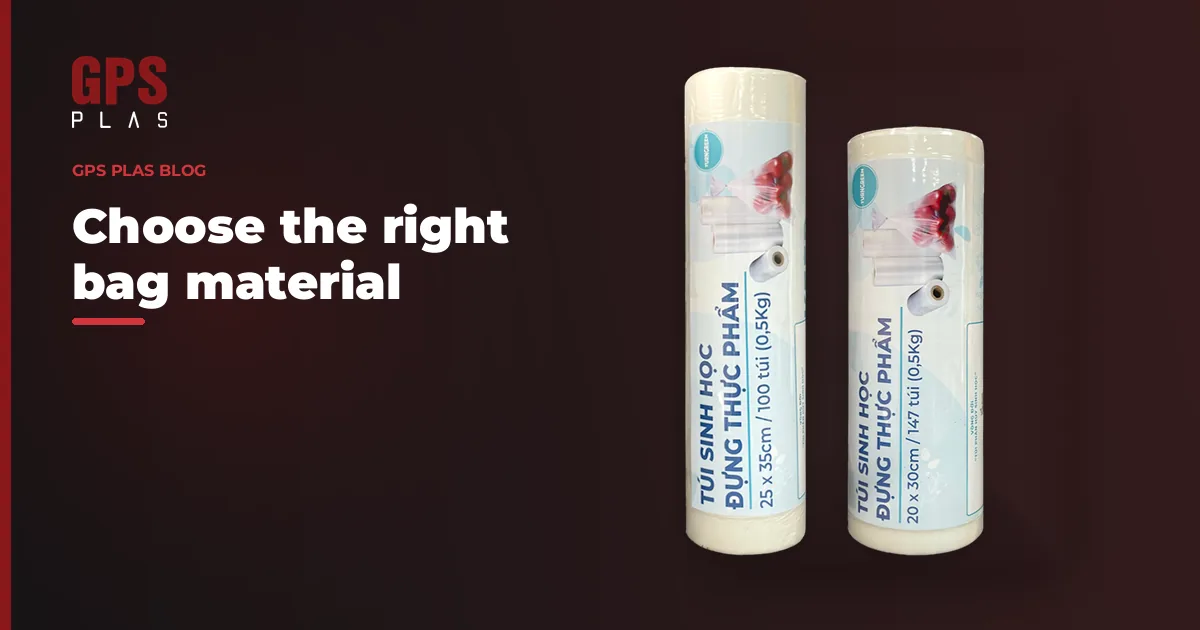
Choose a bag material by the claim you must support and by how the bag will be used and discarded, not by a generic “eco bag” label. At GPS PLAS that choice is among three named ranges: ReFlex for GRS recycled PE, BioFlex for biodegradable PE-TPS, and CompoFlex for EN 13432 compostable packaging. Most bag shapes can be made in all three. A few agricultural and shrink formats are CompoFlex only.
Three honest claims, not one mixed slogan
Each GPS PLAS material has one primary claim. Mixing them on a single pack is how buyers get into trouble.
- ReFlex is film and bags made with GRS-certified recycled PE, from 10 to 100% recycled content. It holds Vietnam Ecolabel VN-ECO-2025-012. It is recyclable after use. It is not biodegradable.
- BioFlex is a biodegradable PE-TPS resin, polyethylene with thermoplastic starch from corn and cassava. It passed EN ISO 14855-1 in 227 days. It is not compostable, because that result sits beyond the 180-day EN 13432 limit. Storage time is more than 3 years.
- CompoFlex is a compostable PBAT compound, EN 13432 compliant, in Home Compostable (TÜV AUSTRIA OK compost HOME) and Industrial Compostable grades, with Vietnam Ecolabel VN-ECO-2026-004. Storage time is 9 to 12 months.
If a tender says “biodegradable or compostable”, ask which one the buyer will accept, and ask which documents they will file. The two claims are different. If it says “recycled and biodegradable”, you may be looking at two products (ReFlex plus a biodegradation grade) or at BioFlex Recycled, which compounds TPS with GRS recycled PE. That last option still is not compostable, and ReFlex itself must never be called biodegradable.
Oxo or “túi tự hủy” bags are a fourth category you should set aside. They fragment rather than biodegrade, and they would not pass EN 13432.
Questions that settle the choice
Before you pick a resin, write down answers to five questions:
- What claim must appear on the bag, the invoice or the import file: recycled content, GRS, recyclable, biodegradable, compostable, Vietnam Ecolabel, or more than one of these?
- How long will the bag sit in a warehouse or on a packed product? Over 12 months points to BioFlex. A compostable programme must live inside a 9 to 12 month storage window.
- What happens to the bag after use: recycling stream, industrial compost, home compost, or mixed residual waste? The material should match a route that actually exists for that customer.
- Is the format one that GPS PLAS offers in all three materials, or is it CompoFlex only?
- Do you need a factory-direct sample of more than one grade? The plant can send more than one, so you can test them on your line.
A factory brief that includes those answers is much easier to quote than a request for “eco T-shirt bags” with no claim and no thickness.
T-shirt bags, die-cut bags and shopping bags
These are the checkout formats: T-shirt (vest) bags, die-cut carry bags and shopping bags, including soft-loop handles. All three materials are available.
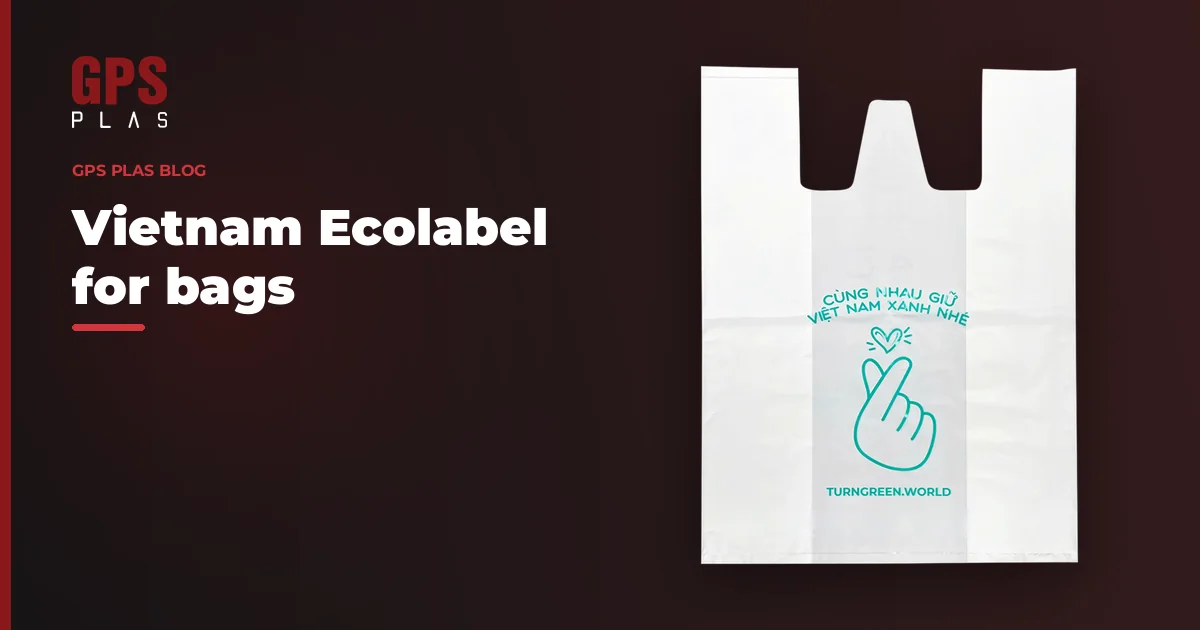
If the programme is a reusable, thicker recycled bag for a Vietnamese retail brief, ReFlex and the Vietnam Ecolabel path are the first place to look. The Ecolabel criteria for recycled PE or PP bags require at least 20% recycled resin, a thickness of 50 µm or more, and each side of at least 50 cm. A very thin vest bag may not fit that path; discuss thickness and reuse with the factory rather than forcing a mark onto the wrong size.
If the retailer wants a compostable checkout bag, use CompoFlex and decide home versus industrial based on the collection system. Watch the 9 to 12 month storage window through the distribution centre.
If the priority is a bag that behaves like PE, prints cleanly and can sit for a long time before use, BioFlex is the usual match. It runs as a drop-in on standard PE lines and carries the biodegradation claim, not a compostable claim.
Cup bags and cup carriers follow the same material logic as other retail formats: all three materials are offered, and the claim plus shelf life should drive the grade.
Mailer bags and garment polybags
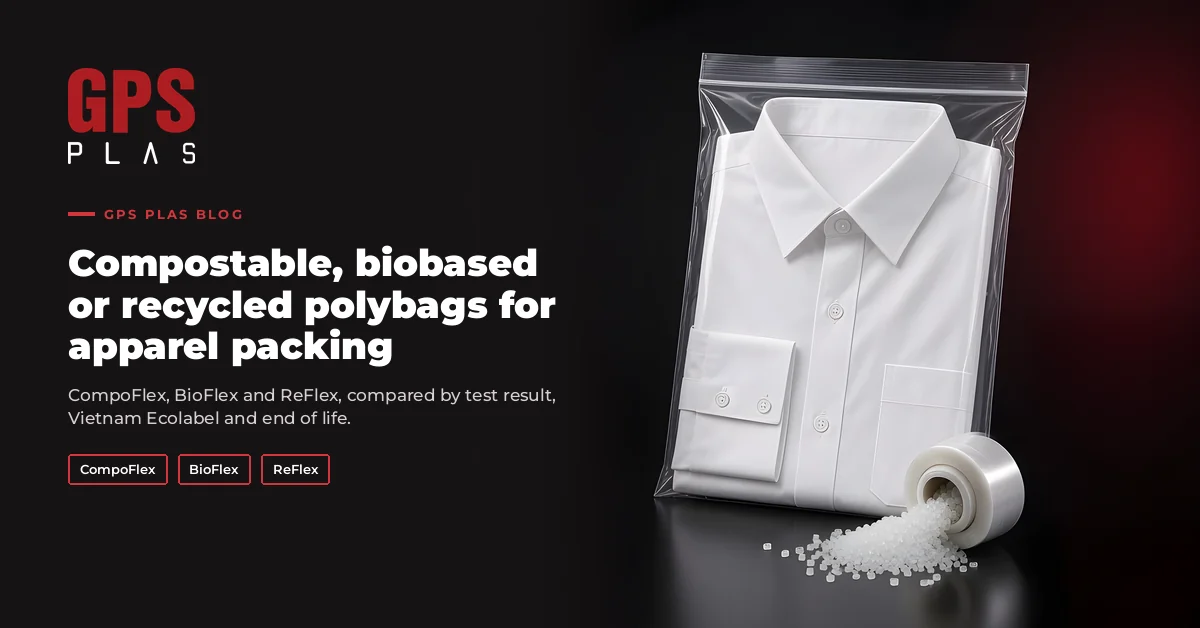
Mailers and polybags (including garment polybags) also come in ReFlex, BioFlex and CompoFlex. The deciding factors are usually storage time and the claim the brand will print.
A garment polybag that must protect a product through a long shipping and warehouse cycle is a poor place to discover that a compostable film has sat past its 9 to 12 month window. BioFlex, with more than 3 years of storage time, is designed for packed goods that extend over 12 months. ReFlex is the recycled, recyclable option when the brief is PCR or GRS content rather than biodegradation. CompoFlex remains available if the brand’s policy requires a compostable pack and the logistics team can rotate stock inside the storage window.
E-commerce mailers follow the same split. Ask whether the bag is meant to enter a recycling stream (ReFlex), to carry a biodegradation claim with a long shelf life (BioFlex), or to be compostable (CompoFlex). Then test the puncture, seal and print behaviour on samples, rather than choosing from a datasheet alone.
Grow bags, grow pot bags, mulch film and shrink film
These four products are the exception: at GPS PLAS they are offered in CompoFlex only. If you are sourcing grow bags, grow pot bags, mulching film or shrink film, you are already in the compostable range. The choice left is the CompoFlex grade (Home or Industrial), the thickness and size, and whether you need print.
That rule is easy to miss when a buyer asks for “recycled grow bags” or “biodegradable mulch” as a shorthand. The factory list is specific. ReFlex and BioFlex are not listed for those four products. If your agricultural or shrink brief cannot use a compostable material, say so early, because GPS PLAS will not have a ReFlex or BioFlex alternative in those formats.
Waste bags, dog poop bags and bags on roll are different: they come in all three materials. For a food-waste or pet-waste bag that must be compostable, CompoFlex is the direct match. For a general waste bag where the brief is recycled content, ReFlex applies. BioFlex can be used where a biodegradation claim and a longer storage time matter more than EN 13432.
How to trial more than one material
You do not have to pick a winner on paper. GPS PLAS compounds and converts in one Tay Ninh factory, and it often sends samples of more than one grade, including BioFlex and CompoFlex side by side. Ask for the matching test reports, and, if GRS matters, ask how a Transaction Certificate would be issued for the order.
Send a brief with the format, size, thickness, print, market and the claim you must support, then request samples. For the detail behind each claim, read the GRS guide, the compostable bags guide and the BioFlex claims guide.
FAQ
How do I choose between recycled, biodegradable and compostable bags?
Start with the claim you must support and the way the bag will be used and discarded. Choose ReFlex for GRS recycled PE that stays recyclable, BioFlex for a biodegradable PE-TPS bag with a long shelf life, and CompoFlex when the bag must be EN 13432 compostable. GPS PLAS often sends samples of more than one grade so you can test them side by side.
Can I use ReFlex, BioFlex and CompoFlex for the same bag shape?
For most standard formats, yes. T-shirt, die-cut, shopping, cup, roll, waste, dog poop, poly, mailer, VCI, ESD and film on roll come in all three materials. Grow bags, grow pot bags, mulching film and shrink film come in CompoFlex only.
Which material is best for a garment polybag or a mailer?
If the pack must stay strong in a warehouse for many months, BioFlex is the usual GPS PLAS recommendation because storage time is more than 3 years. If the brief is recycled content and recyclability, use ReFlex. Use CompoFlex only if the bag must be compostable and you can work within a 9 to 12 month storage window.
Which material should I use for grow bags or mulch film?
At GPS PLAS those products, together with grow pot bags and shrink film, are offered in CompoFlex only.
Is a biodegradable bag the same as a compostable bag?
No. Compostable bags must meet EN 13432, including biodegradation within 180 days in composting conditions. BioFlex is biodegradable (EN ISO 14855-1 in 227 days) and is not compostable. ReFlex is not biodegradable.